PARIS DESIGN WEEK September 2026 - Design in Motion: When Paris Becomes the Exhibition
Paris is not simply hosting design this September. It is becoming its setting.
From 10 to 19 September, Paris Design Week 2026 transforms the city into an open-air exhibition — one in which the boundaries between design, art, architecture, craftsmanship and cultural heritage are becoming increasingly fluid. More than 500 participants across approximately 320 locations are spread throughout four major districts: Rive Gauche, Marais–Bastille–République, Opéra–Concorde–Étoile and Palais-Royal–Place des Victoires–Pigalle, alongside Paris Design Week Factory.
Yet what makes this year's edition particularly compelling is not simply its scale.
It is the way Paris uses its own cultural heritage as a material for contemporary design.
Rather than confining design to exhibition halls and showrooms, the programme moves into museums, historic residences, gardens, squares and cultural institutions. The city becomes a scenography — but also an active participant in the design process.
From Object to Cultural Dialogue
One of the defining characteristics of this year's edition is precisely this encounter between the contemporary object and the historic setting.
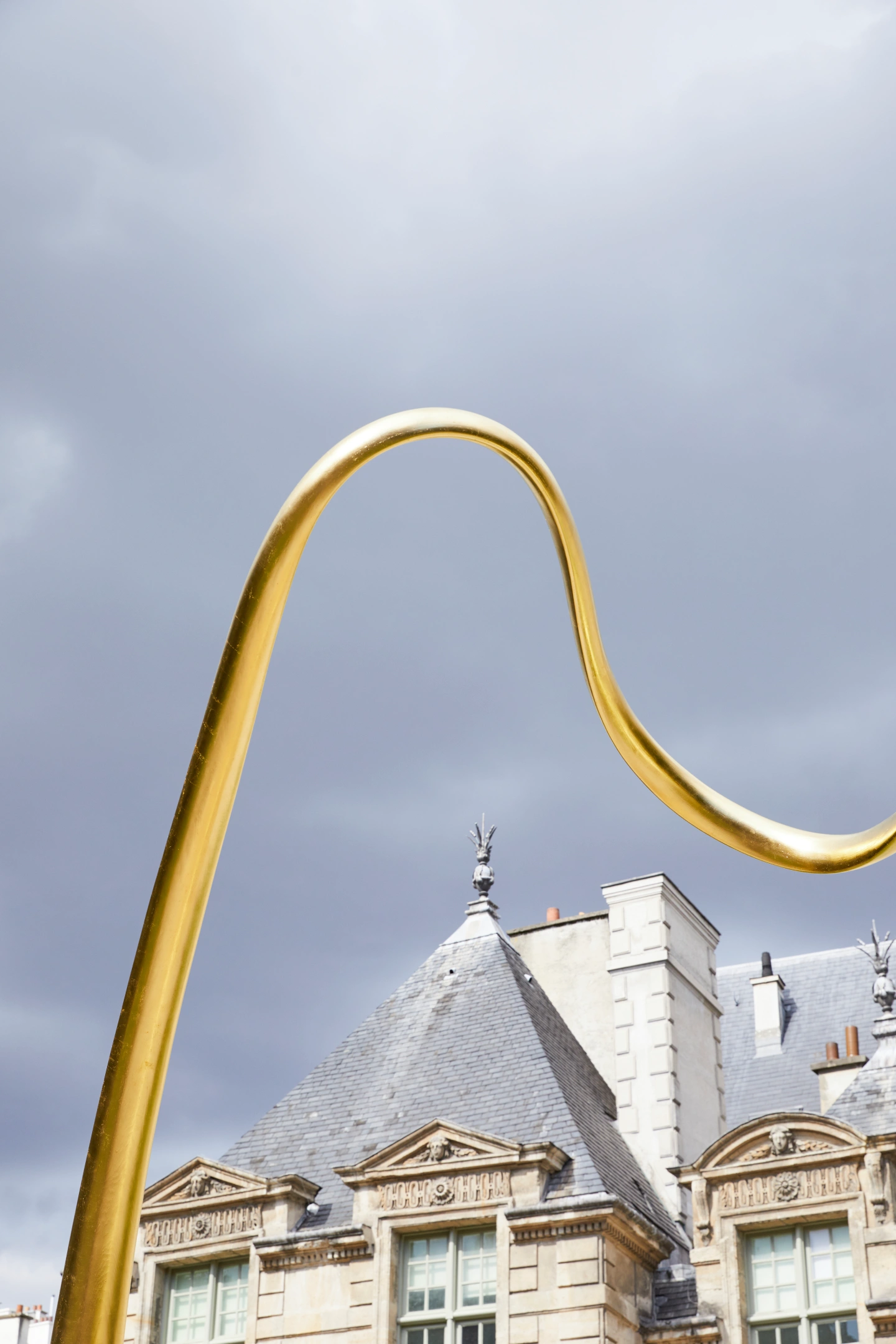
At the Hôtel de Sully, Irish designer Joseph Walsh, this year's guest of honour, presents monumental sculptural forms in ash wood. His organic structures, positioned somewhere between furniture and sculpture, enter into a direct dialogue with the geometry of classical architecture, the courtyard, gardens and historic orangery.
Walsh's approach is particularly relevant to understanding this year's programme: the object is not an isolated entity. It exists in relation to space, material and history.
This may also be one of the most interesting developments in contemporary collectible design — a shift from asking “what is the object?” towards asking “what does the object do to a space?”
When Heritage Becomes Material
One of the most poetic examples can be found at the Musée Bourdelle.
For his first collaboration with Paris Design Week, French designer Anthony Guerrée presents Contrepoint, an installation that places contemporary design in direct dialogue with the sculptures of Antoine Bourdelle.
Wood, glass, textiles and earth become means of exploring form, while moulds and matrices — usually hidden behind the finished object — are presented as independent elements.
Here, design is not presented simply as a finished product.
It becomes the trace of a process.
Guerrée reveals what usually remains invisible: the hand, the material, the imperfection, the mould and the transformation.
In this sense, Contrepoint reflects a broader tendency visible throughout this year's Paris Design Week: a renewed interest in production, craftsmanship and the physicality of the object.
France Meets Korea
Perhaps even more directly, the question of cultural dialogue emerges through Hanjimania at the Hôtel de la Marine.
The exhibition brings together French and Korean designers around hanji, traditional Korean paper whose history stretches back more than a thousand years. Contemporary design does not attempt to displace tradition; instead, it uses it as a starting point for a new interpretation.
Even more significantly, the project forms part of a programme marking 140 years of diplomatic relations between France and Korea.
This is where Paris Design Week moves beyond the boundaries of a design event and enters the territory of cultural diplomacy.
Hanji is no longer simply a material. It becomes a carrier of cultural memory and international dialogue.
The Monument as a Canvas
At the Grand Palais, studio Uchronia and Julien Sebban present Le Grand Bouquet, a monumental installation responding directly to the architecture of the Rotonde d'Antin.
The floral motifs of the mosaics and the botanical ornaments of the historic architecture are transformed into a monumental floral structure that appears almost to grow from the space itself.
This is design that does not attempt to dominate its surroundings. It attempts to continue them. And this is perhaps one of the more significant messages of Paris Design Week 2026: the strongest contemporary design does not necessarily have to be the loudest.
Sometimes its greatest strength lies in its ability to read the space that came before it.
The City as Exhibition
This may be the most important distinction between Paris Design Week and a conventional design fair.
Maison&Objet Pulse, taking place from 10 to 14 September at Paris Nord Villepinte, represents the professional and commercial side of the wider design ecosystem. Paris Design Week, however, continues to expand through the city itself — into galleries, museums, hotels, schools, showrooms, historic buildings and public spaces.
Design leaves the fair. And that is when it becomes particularly interesting.
In the Marais, Paris Design Week Factory places a particular emphasis on a new generation of designers. The 2026 edition unfolds across several locations, with a strong focus on emerging talent and collectible design.
This represents the other side of this year's event: while institutions open their doors to established names and large-scale installations, Factory looks towards what comes next.
Beyond Decoration
Paris Design Week 2026 is therefore interesting not simply because of the new chairs, lamps, textiles or collections on display.
Its significance lies in a broader question: How do we design the relationship between people, objects and space today?
From Joseph Walsh's organic forms to Guerrée's investigation of materials; from Korean hanji to the monumental Grand Bouquet; from historic museums to experiments by emerging designers, this year's programme suggests that contemporary design increasingly functions as a cultural practice.
It preserves craftsmanship without turning it into a museum piece.
It embraces technology without abandoning materiality.
It references history without living in the past.
And this is precisely why Paris Design Week 2026 can be understood as something much larger than an event on the international design calendar.
It is a conversation between objects and places, heritage and innovation, memory and imagination.