Gabrielle du Plooy: We still avoid talking honestly enough about what happens after the celebration of women artists
The art world has become increasingly attentive to the visibility of women artists. But visibility is not necessarily influence, and recognition does not always translate into lasting cultural or market power.
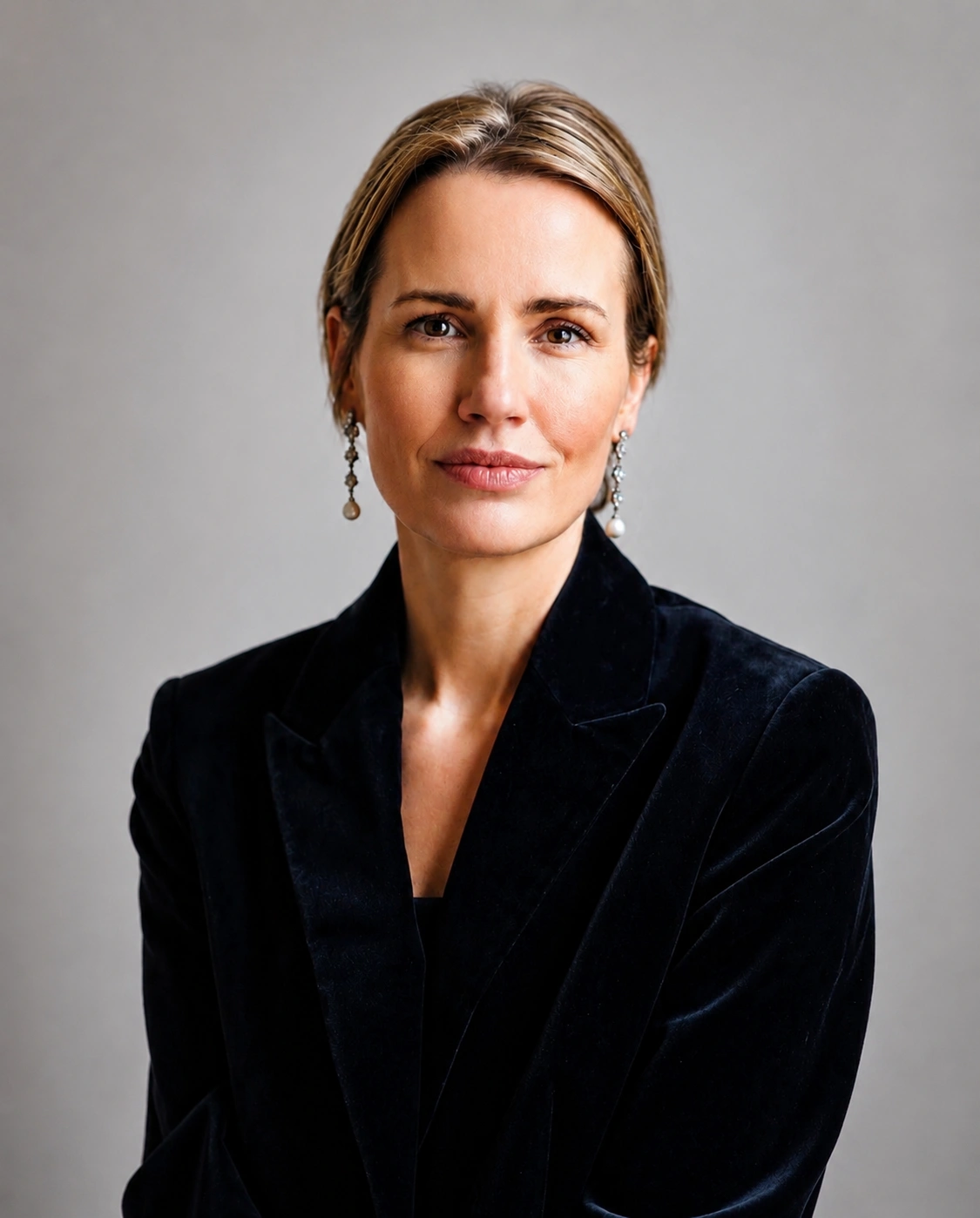
Through her work across the gallery world, art consultancy and the Women in Art Prize, Gabrielle du Plooy has observed these dynamics from close range. In this conversation for Culture Diplomacy Hub, she reflects on meaningful support, the changing structures of influence, artistic independence, the relationship between art and social causes, and what happens after the celebration of an emerging artist has passed.
CDH Talks: What constitutes meaningful support for women artists — and what does not?
Gabrielle du Plooy: For me, meaningful support has to go beyond saying the right things. It means creating actual opportunities: exhibiting women's work, introducing artists to collectors and galleries, buying their work, recommending them, giving them platforms and continuing to support them after an exhibition or prize has finished. That's why I built womeninart.com , we take no commission ( small subscription fee) have put all the tools, templates, resources and opportunities into the artist studio for them to be able to use to hopefully help them understand and build a successful sustainable career.
Visibility is important, but visibility without opportunity can be very short-lived. Real support is often what happens quietly behind the scenes — the introduction, the recommendation, the sale, the conversation with a collector, or simply continuing to champion an artist when there is no immediate publicity attached to it.
CDH Talks: Has the structure of influence genuinely changed?
Gabrielle du Plooy: It has changed, absolutely, and I think we should acknowledge how much progress has been made. Women are far more visible as artists, curators, collectors, museum directors and decision-makers than they were even a generation ago.
But visibility and equality aren't necessarily the same thing. There are still significant differences in representation, particularly when you look at the highest-value end of the market, major collections and the historical canon.
For me, the next stage isn't simply about putting women into the room. It's about women having genuine influence once they're there.
CDH Talks: What suggests an artist can build a lasting career?
Gabrielle du Plooy:Talent matters enormously, but a lasting career takes much more than one successful exhibition, prize or moment of attention.
The artists I find particularly interesting are continually developing. They're curious, they take risks, they work when nobody is watching and they don't simply repeat what has already brought them recognition.
Through the Women in Art Prize, I've seen extraordinary artists at completely different stages of their lives. One thing it has reinforced for me is that there is no correct age or timetable for becoming an artist. A career can begin, change direction or flourish at almost any point.
CDH Talks: How can artists balance independence with the market?
Gabrielle du Plooy: Artists need to understand the market, but I don't believe they should allow the market to dictate their work.
Of course artists need to sell — they have studios, materials, mortgages and lives to pay for like everybody else. There is nothing wrong with wanting commercial success.
The difficulty comes when an artist starts making decisions primarily because they believe something will sell. Collectors ultimately respond to conviction. The strongest careers tend to come from artists who understand the commercial world while protecting the thing that made their work distinctive in the first place.
CDH Talks: Where is the line between art and a cause?
Gabrielle du Plooy: I have always believed art can be an incredibly powerful way of opening conversations about subjects that matter. I've been involved with exhibitions and projects connected to social and philanthropic causes, and I've seen the impact they can have.
But I don't think art should be required to justify itself through a cause. Art is allowed to exist simply because an artist needed to make it.
When art does engage with a social issue, the strongest work isn't usually illustrating a message somebody else has given it. It creates its own meaning and gives us space to think, question and sometimes feel uncomfortable.
CDH Talks: What conversation is the art world still avoiding?
Gabrielle du Plooy: I think we still avoid talking honestly enough about what happens after the celebration of women artists.
We have become much better at talking about representation, but the deeper question is longevity. Who gets collected? Who receives serious institutional attention? Whose prices are sustained? Who is written into art history rather than briefly appearing in the conversation?
I am interested in what happens five, ten or twenty years after somebody is described as an "important emerging woman artist." That's where meaningful change will ultimately be measured.
CDH Talks: What is the next generation challenging?
Gabrielle du Plooy: I think younger women artists are far less willing to wait for permission.
Previous generations often had to work within structures that weren't created with them in mind. The generation coming through now is much more comfortable creating its own platforms, audiences and communities.
They're also questioning ideas around age, motherhood, identity, beauty, the body and what an artist's career is supposed to look like. I find that incredibly exciting. They aren't necessarily asking to be included in the old model — they're asking whether the old model still deserves to exist in its current form.
CDH Talks: Which women artists are changing how we see the world right now?
Gabrielle du Plooy: There are so many that I would be reluctant to reduce it to a definitive list. What excites me is the extraordinary breadth of women's practices today.
Artists such as Tracey Emin continue to make deeply personal experience feel universal. Jenny Saville has profoundly challenged conventional ways of looking at the female body. Lubaina Himid has changed conversations around history, race and representation, while Barbara Walker makes us reconsider whose lives and histories are made visible.
But I'm equally interested in the woman working quietly in her studio whose name most of us don't know yet. One of the privileges of the Women in Art Prize is seeing remarkable work before the wider art world necessarily discovers it.
For me, cultural influence isn't only about fame.