Rethinking the Geography of Cultural Power | Auronda Scalera and Alfredo Cramerotti
As cultural influence becomes increasingly distributed across regions, institutions and digital platforms, the question of who defines, interprets and legitimises culture is becoming more pressing. New museums, biennales and international cultural initiatives are reshaping the global cultural landscape, yet the redistribution of infrastructure does not necessarily mean a redistribution of authority.
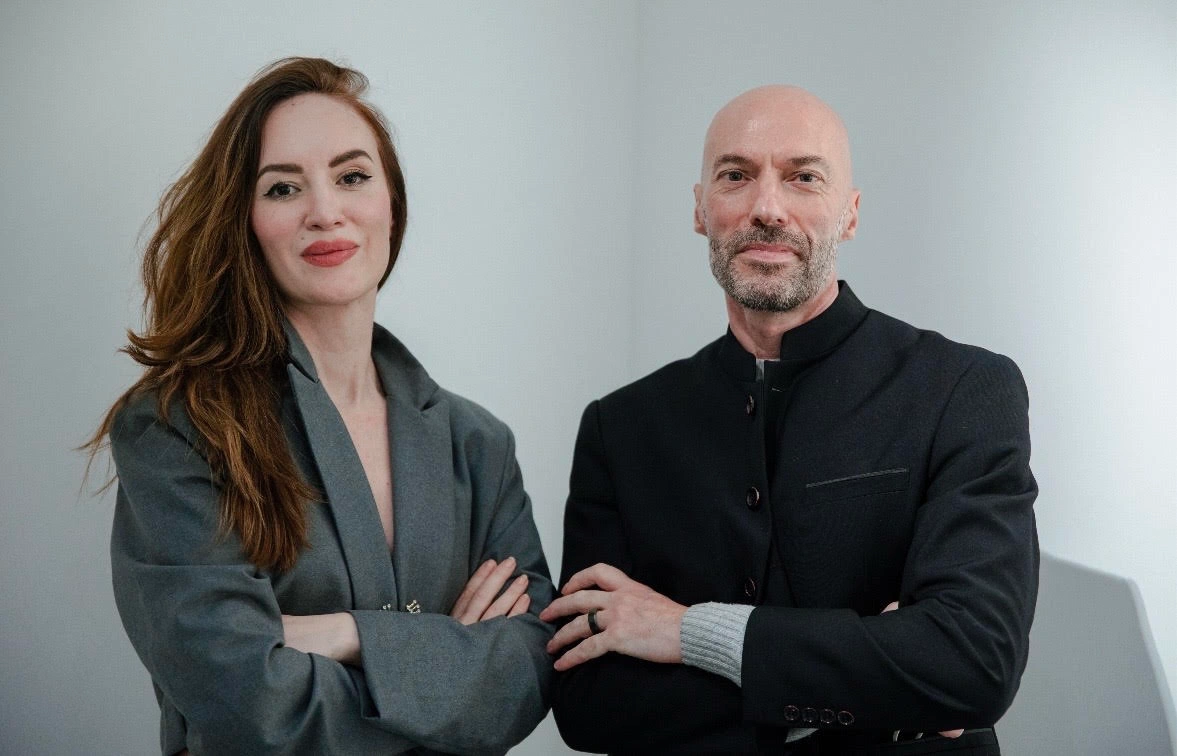
In this conversation, curators and cultural strategists Auronda Scalera and Alfredo Cramerotti examine the changing relationship between cultural power, sovereignty and diplomacy. From the politics of representation and the autonomy of cultural institutions to the circulation of knowledge and the influence of artificial intelligence, they consider what it means to negotiate cultural authority in an increasingly interconnected world.
Rather than treating cultural exchange as an uncomplicated form of international cooperation, this conversation looks at the structures that shape it: who sets the criteria, whose histories are represented, who controls visibility and under what conditions cultural independence can be sustained.
At its core, the discussion asks whether the emerging geography of culture is producing a genuinely more plural global landscape — or simply giving an established system of power a new map.
CDH Talks: The geography of culture may be becoming more polycentric, but does the redistribution of cultural infrastructure necessarily lead to a redistribution of cultural authority?
Auronda Scalera: We watched an interesting test case in Doha this February: Art Basel Qatar opened with 87 galleries, and its artistic direction went to Wael Shawky, who chose to have more than half the artists come from the region — that is, the brand stayed Swiss and the judgement was regional. For us, authority is redistributed when the people setting the criteria were trained, published and paid within a region, and when those criteria are then picked up elsewhere. Until that circulation runs in both directions, a polycentric map can still speak with a single voice.
Alfredo Cramerotti: In general, infrastructure moves faster than authority; a building can be commissioned and opened within a decade. The habit of looking to certain cities for a verdict takes generations to shift — for instance, Abu Dhabi announced its Guggenheim in 2006 and opens it in December 2026, presenting its collection through a lens rooted in the region. That is a real change in where art is seen — who writes the wall texts, who edits the catalogues and whose scholarship gets cited ten years from now are still open questions.
CDH Talks: Where do you draw the line between cultural diplomacy and the strategic instrumentalisation of culture?
Auronda Scalera: It is more honest to admit that the line is never clean. The British Council and the Goethe-Institut were both founded with national interest written into their purpose. Gulf states today are doing, with more resources, what European states did for most of the twentieth century. National branding comes with the territory everywhere — what matters to us is what happens inside that frame. We look at reciprocity: does the programme allow the guest to change the host? And we look at duration: does the relationship survive once the funding cycle and the press cycle have ended?
Alfredo Cramerotti: In my view, instrumentalisation begins when an artwork is asked to illustrate a conclusion reached before the artist was invited. I argue instead that images are operational: they act in the world whatever we intend for them, and a commission that leaves them room to act unexpectedly is diplomacy in the full sense of the word. When every outcome is scripted in advance, the work becomes a communication asset, and audiences notice at once. The test I use is simple: if a programme cannot host a disagreement in public, it is doing branding.
CDH Talks: When cultural institutions seek to correct imbalances in representation, how can they avoid replacing one dominant narrative with another?
Auronda Scalera: By changing the method and keeping the disagreement visible. If you add new names to the same structure, you get a new canon with the same architecture. Koyo Kouoh's title for this year's Biennale, In Minor Keys, offered an honest answer: the response to a dominant anthem is a change of register, where many voices can be heard at a lower volume and none of them has to win. Documenta 15 showed how hard this is in practice. Ruangrupa handed authority to a network of collectives, and when conflict came the institution had no agreed protocol for it. The expert panel's own recommendations ended with clearer responsibilities and a complaints procedure. However one reads the works, the lesson for curators is structural: distributed authority needs rules for conflict agreed before the opening, otherwise the old centre reasserts itself through the crisis.
Alfredo Cramerotti: I often go back to Warburg's Mnemosyne Atlas. Its panels could be rearranged, and meaning came from adjacency. Auronda and I have been working on what we call Nachleben Digitalis, the afterlife of images in digital circulation, and one lesson is that no image keeps a single meaning for long. An institution that wants to correct an imbalance can build that mobility into the museum itself, with collection readings written in rotation by different communities and labels that carry more than one voice — the aim is a museum that stays rearrangeable.
CDH Talks: What assumptions about cultural leadership or artistic legitimacy have you encountered that do not travel well from one context to another?
Auronda Scalera: In Europe, legitimacy is usually assumed to come from distance: the arm's-length principle, the institution that keeps government at a polite remove. In the Gulf it often comes from closeness to a vision and the ability to deliver it quickly. A project can be decided here in a month that would take three years of committees in Rome or London. Sure enough, both models carry risks, and each side tends to read the other's strength as a flaw. Europeans can mistake speed for superficiality, and Gulf partners can mistake European process for a lack of ambition. Korea possibly offers a third model — the Gwangju Biennale was founded in 1995 in the memory of the May 1980 uprising, so legitimacy there is bound to civic memory in a way neither European nor Gulf frameworks fully capture, though bureaucracy and hierarchical structure are still at play there, too.
Alfredo Cramerotti: The assumption that travels worst is the idea of a single general public. I was born and raised in a bilingual region, and it taught me that core notion earlier in life. At Mostyn in Wales we worked in two languages every day, and a small nation demonstrated that the periphery usually understands the centre better than the centre understands itself. In Doha, the name of the museum I direct carries a different model — a majlis is a space where authority is exercised by hosting a conversation. Many European museums draw their legitimacy from the collection they hold; a majlis draws its legitimacy from the quality of the exchange it makes possible. Each model has something to teach the other.
CDH Talks: What does cultural sovereignty mean in a world where visibility is increasingly mediated by global art markets, digital platforms and international institutions?
Auronda Scalera: I would add the right to opacity that Édouard Glissant defended: the right not to be made fully legible on demand. Platforms reward what can be read instantly. Much of the culture of our region, as of many others, lives in oral and intimate registers that lose their meaning once they are flattened into content. Sovereignty also has a very concrete technical side now: where a national archive is stored, under what licence, and whether it can be used to train models owned elsewhere. A country can build a magnificent museum and still lease out its memory.
Alfredo Cramerotti: Sovereignty now concerns the conditions of visibility as much as the content. An image of a Gulf city or a Pacific island reaches most people through a platform's ranking, a fair's sales report or a museum's acquisition record, and each of those filters has an owner. I curated both Wales in Venice and the Maldives Pavilion in 2013, the Pavilion of Mauritius in 2015, contributed as curatorial advisor to the Pera-Flora-Fauna, the Malaysian Official Collateral Event, in 2017 and, this year, was involved in the Nauru Pavilion. Venice is still one of the very few places where a small island state shares a floor with the superpowers. That floor belongs to Venice, though; for a small nation, sovereignty means deciding how to stand on someone else's floor, and what to say while standing there.
CDH Talks: Looking towards the next decade, what would constitute a genuine structural transformation of the global cultural landscape?
Auronda Scalera: We would measure it in flows. Where curators are trained, and where they are hired afterwards; which way loans travel, and whether a museum in Riyadh or Jakarta lending to Paris becomes ordinary news; which language a catalogue is first published in, and which languages it is translated into; whether artists' fees follow a shared standard across regions. If these flows balance out, the map will have changed in substance. If they stay one-directional, we will have new buildings on an old map.
Alfredo Cramerotti: The next decade's map will also be drawn in code — large models are being trained on the world's cultural archives, most of that material is in a handful of languages, and it sits on servers in very few countries. Real transformation would mean institutions across the majority world setting the terms on which their memory is used, with licences they write themselves and a share of the value it generates. Curators will have to work on those terms as seriously as they work on exhibitions. The geography of cultural power will be decided partly in galleries and partly in data centres, and we intend to be present in both rooms.