Sid Rouis: Culture offers something politics alone often cannot: hope
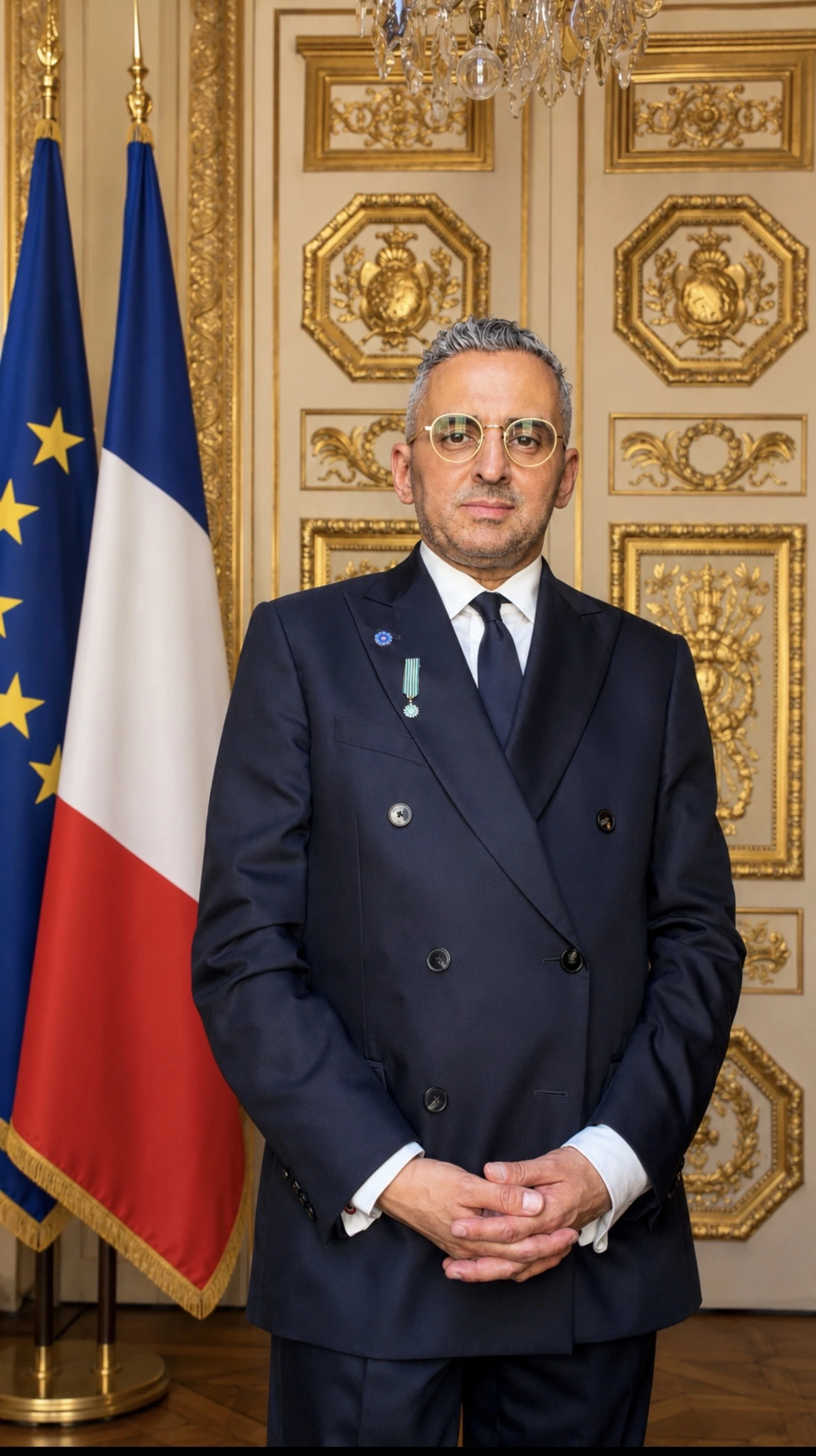
Sid Rouis is a French expert in cultural diplomacy, international relations and strategic engagement. A former Special Adviser to the French Minister Delegate for Francophonie and a former French diplomat, he served between 2012 and 2025 in Nigeria, Lebanon, Libya and Saudi Arabia.
In Saudi Arabia, he contributed to the implementation of the G20 Cultural Program and to major international initiatives supporting the Kingdom’s cultural transformation.He is recognised for his ability to build bridges between governments, cultural institutions, civil society and the private sector to foster dialogue, mutual understanding and sustainable partnerships.
In October 2025, he was appointed a Knight of the Order of Arts and Letters (Chevalier de l’Ordre des Arts et des Lettres) by the French Minister of Culture.
We are trilled to talk with him.
CDH Talks: You served as Attaché for Cooperation and Culture at the French Embassy in Tripoli during a period marked by significant political tensions in Libya.
How did serving in such a unique and challenging position shape your understanding of the role of culture in a highly sensitive environment?
Sid Rouis: Libya profoundly reshaped my understanding of cultural diplomacy. It confirmed that culture is not a luxury reserved for times of peace; it is often most essential in times of uncertainty. Even in fragile environments, culture creates opportunities to listen, reconnect and restore confidence.During periods of tension, cultural cooperation becomes an act of continuity. Supporting artists, academics, students and heritage professionals means investing in relationships that endure beyond political circumstances.
That experience strengthened my conviction that diplomacy is ultimately about people, and that culture is one of the most resilient forms of dialogue.Even in the most fragile environments, culture offers something politics alone often cannot: hope. It creates opportunities to listen, reconnect and restore confidence.
CDH Talks: When political narratives become sources of division, can cultural diplomacy still create spaces for trust and dialogue?
Sid Rouis: Absolutely. Cultural diplomacy cannot erase political disagreements, but it can preserve the human connections that politics sometimes weakens.
Artists, researchers, writers, students and young entrepreneurs often continue talking to one another even when governments disagree. Those exchanges create spaces where curiosity replaces prejudice and where trust can gradually be rebuilt. In that sense, culture rarely provides immediate solutions, but it often prepares the ground on which future dialogue becomes possible.
CDH Talks: What are the greatest challenges for a cultural diplomat working in a country where historical events have profoundly shaped public perceptions of another nation?
Sid Rouis: The first challenge is to listen before seeking to be heard.History inevitably shapes perceptions, and those perceptions deserve respect. Cultural diplomacy should never attempt to erase history; it should create opportunities to understand it together while building new chapters based on mutual respect and shared projects.Authenticity, consistency and patience are essential. Trust cannot be imposed, it is earned over time through meaningful cooperation and genuine human relationships.
CDH Talks: How can cultural representatives maintain credibility, neutrality, and public trust while operating in complex geopolitical contexts?
Sid Rouis: Credibility begins with consistency.
People instinctively recognize whether cultural engagement is sincere or merely instrumental. Maintaining trust requires transparency, respect for local partners and a genuine willingness to listen. It also means recognizing that cultural diplomacy is not about delivering messages; it is about creating conversations.
While cultural diplomacy is inevitably part of a country's international engagement, its credibility depends on its ability to remain open, respectful and focused on long-term relationships rather than short-term circumstances.
CDH Talks: To what extent can cultural diplomacy remain effective during periods of political crisis, particularly when public trust between societies has already been damaged?
Sid Rouis: Paradoxically, this is often when cultural diplomacy becomes most valuable.
Political crises may interrupt official dialogue, but they do not erase the desire of people to learn from one another. Educational exchanges, artistic cooperation, scientific partnerships and heritage initiatives help preserve those essential human connections.
Their impact is rarely immediate, but cultural diplomacy works with a longer horizon. It plants the seeds of future dialogue long before political conditions make it possible.
CDH Talks: Cultural diplomacy is often described as a bridge between societies rather than governments. In your experience, can cultural diplomacy truly remain neutral? What fundamental principles should it be built upon?
Sid Rouis: I believe cultural diplomacy should strive not for political neutrality, but for intellectual honesty, mutual respect and openness.
Its purpose is not to ignore differences, but to create the conditions for dialogue despite them. Its legitimacy rests on universal principles: respect for cultural diversity, freedom of artistic expression, education, knowledge-sharing and human exchange.
At its best, cultural diplomacy reminds us that before we belong to different nations, we belong to a shared humanity. In a world increasingly defined by fragmentation and mistrust, that may be its greatest strength.
CDH Talks: As the world faces increasing polarization, what role do you believe cultural diplomacy will play in shaping the next generation of international relations?
Sid Rouis: In a world marked by geopolitical tensions, growing polarization, disinformation and declining trust, culture remains one of the few universal languages capable of bringing people together beyond political differences. It creates opportunities for dialogue where politics alone often reaches its limits.
The future of international relations will depend not only on governments and diplomatic negotiations, but also on the ability of societies to understand one another, respect their differences and build lasting human connections. This is where cultural diplomacy has its greatest value: creating spaces where artists, students, researchers, entrepreneurs and civil society can exchange ideas, challenge stereotypes and discover shared aspirations.
At a time when information manipulation is increasingly used to destabilize societies and undermine trust between nations, cultural diplomacy also has a responsibility to strengthen resilience through education, critical thinking and intercultural dialogue. The example of France, through initiatives such as French Response, demonstrates the importance of addressing disinformation with responsibility, transparency and verified information. Yet countering disinformation cannot rely on facts alone. It must also be accompanied by a sustained commitment to promoting cultural diversity, fostering mutual understanding and encouraging dialogue, because culture remains one of the most powerful antidotes to ignorance, prejudice and manipulation.
If we continue to invest in people, knowledge and creativity, cultural diplomacy will not simply accompany international relations—it will help shape a more peaceful, resilient and cooperative world by placing trust, mutual respect and our shared humanity at its very centre.
CDH Talks: As you begin your new role as Director for Development Africa at Richard Attias & Associates, what opportunities do you see for connecting cultural diplomacy, international development and strategic partnerships across the African continent?
Sid Rouis: For me, this new chapter is a natural continuation of my professional journey.
Richard Attias embodies excellence, vision and bold leadership. He has the unique ability to bring together heads of state, business leaders, entrepreneurs and thought leaders to deliver initiatives with global impact. Joining Richard Attias & Associates means becoming part of an environment that challenges you to think bigger, innovate and deliver at the highest level.
In this role, I see a unique opportunity to connect cultural diplomacy, international development and strategic partnerships across Africa. As the continent undergoes a remarkable transformation, driven by its youth, creativity and entrepreneurial spirit, there is tremendous potential to build partnerships between governments, international organizations, the private sector, cultural institutions and civil society that deliver lasting impact.
I believe Africa's global influence will increasingly be shaped not only by its economic growth, but also by its cultural dynamism, human capital and ability to forge trusted international partnerships.
This is not a departure from diplomacy—it is another way of serving it. The French diplomatic service has shaped my career and my values, and I remain deeply committed to its mission. I see this experience as an opportunity to broaden my perspective, strengthen my international network and gain new expertise before one day returning to public service with even greater experience, bringing added value to France's engagement with the world.