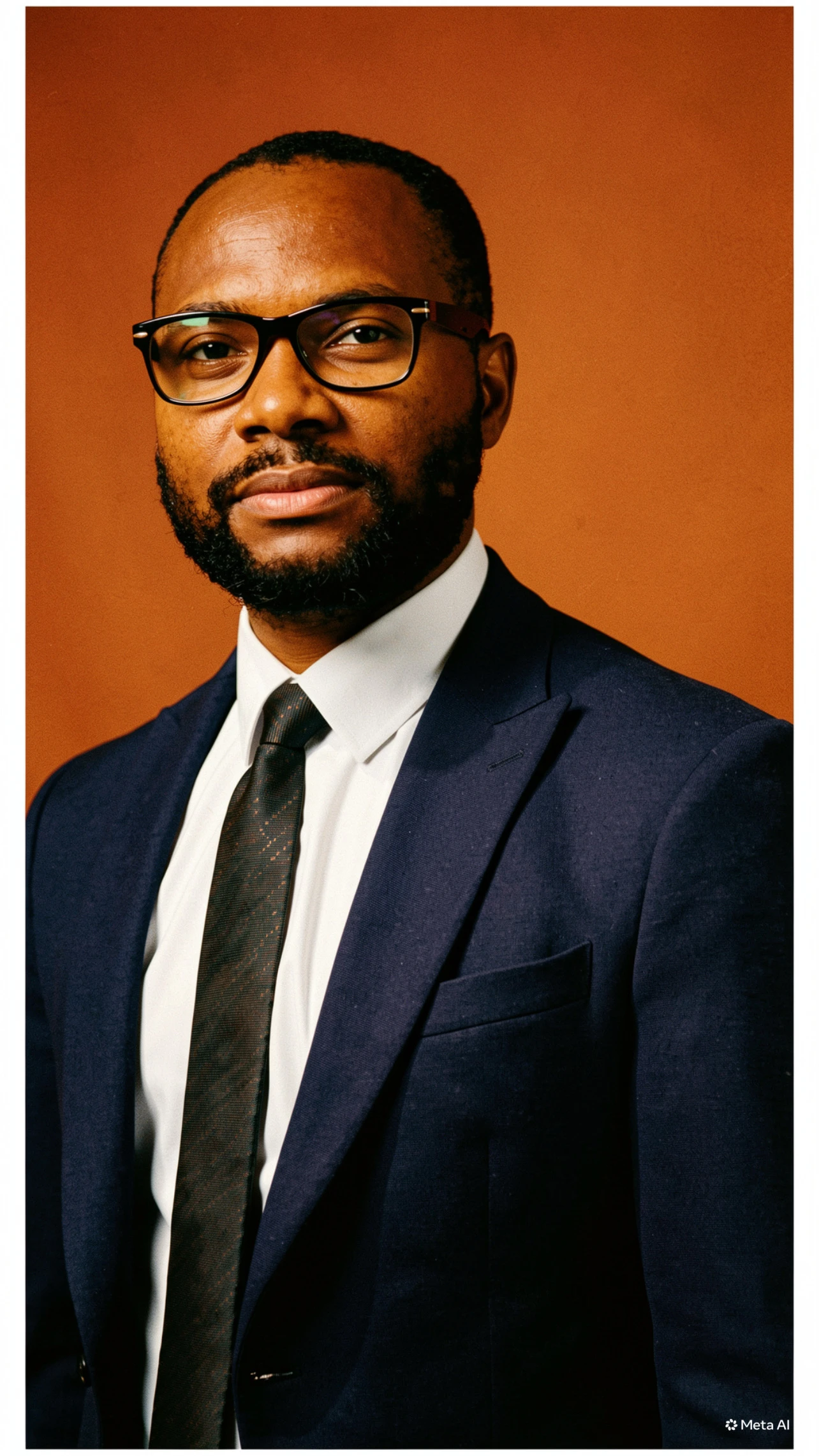
Stepane H Ahidjo: African people are not only the subjects of stories but the authors of the images that define teh internationally
What happens when African filmmakers move from being the subjects of stories to the authors of their own images?
In an era where international markets often reduce the African continent to singular narratives of hardship or exoticism, filmmakers are actively redefining how history, tradition, and contemporary life are documented. Through thoughtful projects like African Spartans, which bridges Cameroonian traditions with global historical benchmarks, cinema emerges as both an instrument of cultural diplomacy and a driver of self-perception.
In the following interview, we explore the nuances of narrative sovereignty, the role of internal diversity in storytelling, and the urgent need for cinema that empowers the next generation.
CDH Talks: When did you first realize that a lens could cut deeper than just telling a story?
Stepane H Ahidjo: I think it came from understanding that cinema is not only about entertainment. A camera gives youthe possibility to look at reality and question it. In my work, I have often been attracted to subjectswhere there is a human or social question behind the story. Cinema allows me to transform those realities into stories that can create emotion and, hopefully, reflection. My role as a filmmaker is therefore not simply to tell a story, but also to open a conversation.
CDH Talks: How do you build a bridge between cultures without descending into political propaganda in the context of culture diplomacy?
Stepane H Ahidjo: For me, cultural diplomacy through a camera means creating a bridge between people who may not share the same history, language, or culture. When you show a story honestly, the audience is invited to enter another person's world. You don't need a political speech to create dialogue; sometimes an image, a character, or a cultural practice can do much more. Cinema can therefore become a form of diplomacy because it allows cultures to meet on human terms. It gives people the opportunity to discover one another rather than simply receiving an abstract image of another country or continent.
CDH Talks: What changes when Africans tell their own stories?
Stepane H Ahidjo: The most important change is the point of view. When Africans tell African stories themselves,they are able to show the complexity that is often lost when Africa is represented from outside.Africa is not one story, one culture or one problem. There are histories, traditions, contradictions,ambitions, humour, spirituality, modernity and ordinary daily lives. When we tell our own stories,we can decide what deserves to be remembered and how our people should be seen. It is not about rejecting European or Western perspectives. It is about creating a balance, so that African people are not only the subjects of stories but also the authors of the images that define them internationally.
CDH Talks: In 'African Spartans', you draw a direct parallel between the Cameroonian LABI initiation and the Spartan Agoge—is using a Western historical reference a necessary bridge for global audiences, or a risky trap? Ultimately, what did the film reveal about unseen African traditions and the way the world understands African history?
Stepane H Ahidjo: African Spartans began with the discovery of the LABI, a rigid traditional initiation that immediately made me think of the Spartan Agoge. The film explores that unexpected parallel between a Cameroonian tradition and something that is much more familiar internationally through the history of ancient Greece. What interested me was the question of how many African traditions remain unknown outside Africa simply because they have not been sufficiently documented or presented to the world.
The comparison with Sparta is also a way of creating a bridge for an international audience. People may already know about Spartan education well described in the famousHollywood epic movie "300", so the comparison gives them a point of entry into discovering LABI. But ultimately the African tradition must be understood on its own terms. African history should not always need a European reference point in order to be considered important.
CDH Talks: How important is Cameroon's internal diversity to representing "Africa"?
Stepane H Ahidjo: It is essential. Cameroon itself demonstrates why the idea of a single African identity can be misleading. The country contains many peoples, languages, traditions and ways of understandingthe world. For me, representing Africa means starting with the particular rather than pretending to speak for an entire continent. A Cameroonian story can be deeply local and, at the same time, speak to universal human experiences. That diversity is a strength. It means African cinema does not have to produce one definition of "African culture." Instead, it can reveal the extraordinary number ofcultures and identities that exist within Africa.
CDH Talks: Does the international film industry still impose expectations on African storytelling?
Stepane H Ahidjo: Yes, I believe there are still expectations. Sometimes the international market has a preconceivedidea of what an "African story" should look like — poverty, conflict, migration, exoticism or certainforms of suffering. These realities certainly exist and deserve to be addressed, but theycannot represent the whole continent.
African filmmakers should have the freedom to tell stories about love, humour, history, technology, family, spirituality, ambition and everyday life as well as difficult social questions. International audiences should not only be offered the Africa they expect; they should also be introduced to the Africa they do not yet know. The growing presence of African filmmakers at festivals and on international platforms is important because it gives us more opportunities to broaden that image.
CDH Talks: Looking ahead, what kind of African stories do you believe the world needs to hear now — stories that perhaps remain largely invisible in international cinema?
Stepane H Ahidjo: I think the world needs stories that show the Africa that is often invisible: the Africa of ordinarypeople, cultural memory, traditions, young people, creativity, family relationships and thecomplexity of contemporary African life. We also need stories about our history told from within African communities, before those histories disappear.
And we need stories that connect Africa with the rest of the world without reducing Africans to victims. Ultimately, I believe the world needs African stories told by Africans in all their diversity — not because Africa needs to prove something to the world, but because the world is incomplete when only a fraction of African experiences are visible.
CDH Talks: What is one story you personally feel compelled to tell, even if the international film industry is not yet ready for it?
Stepane H Ahidjo: The story I feel most compelled to tell is the story of African heroes—the ordinary people who accomplished extraordinary things, often without recognition, resources, or support. I want to tell stories that remind Africans that they are not powerless and that they have the potential, talent, intelligence, and courage to change their own reality. (Currently, I'm writing a script for a feature movie on a forgotten and visionary African hero!)
Perhaps the international film industry is not always ready for these stories because the world is still very comfortable with a particular image of Africa. But I believe cinema can help change that image. More importantly, it can change the way Africans see themselves.
My ambition is to create films that make an African child or young person watch the screen and think: "If they did it, I can do it too."