Woman in Mind by Maryam Eisler
CDH Talks: How would you describe your photographic language today?
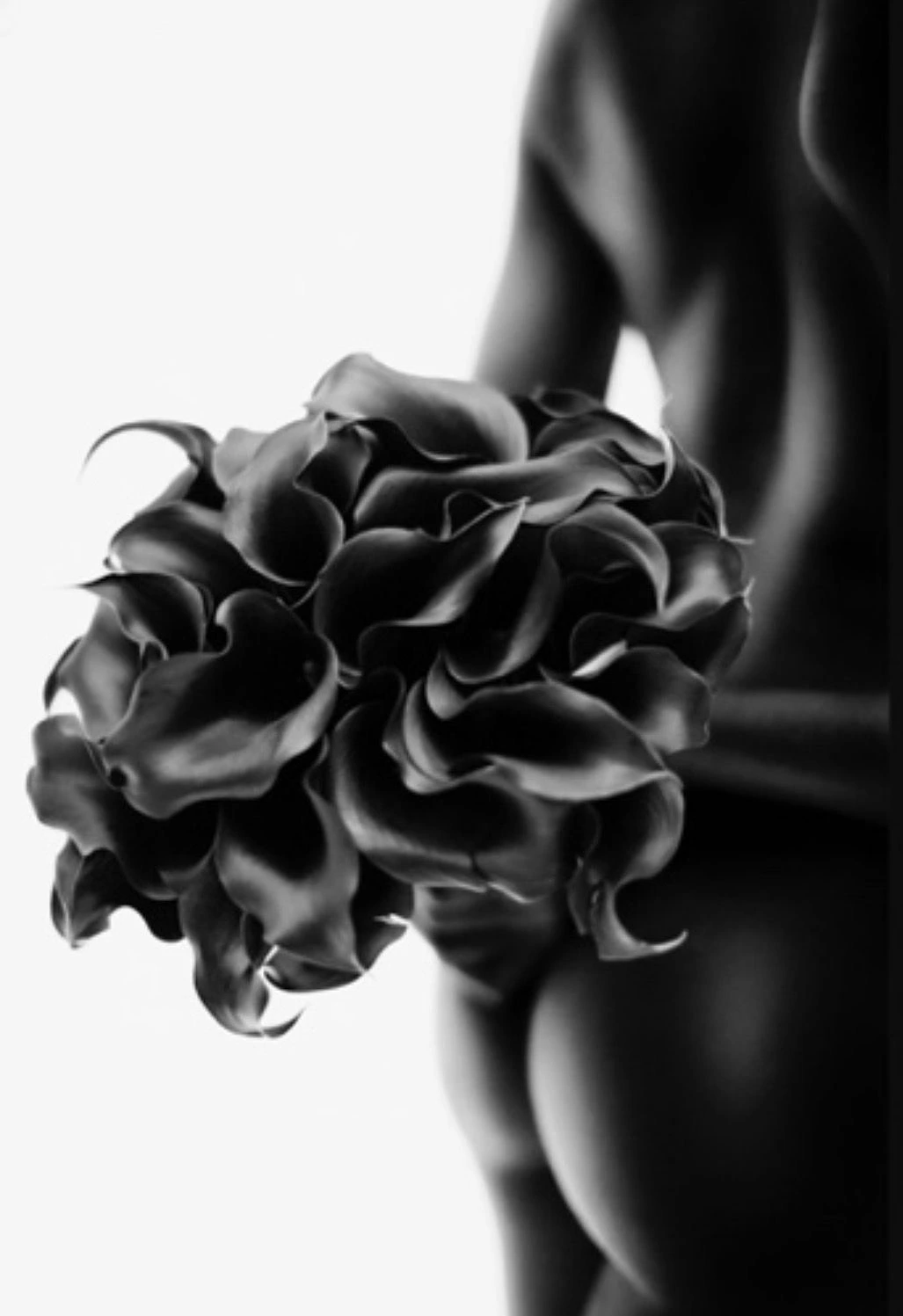
Maryam Eisler: Today, I would describe my photographic language as poetic, emotionally driven, and deeply rooted in storytelling. I am less interested in documenting the world as it appears and more interested in capturing how it feels. My photographs often inhabit the space between memory and reality, where nostalgia, longing, beauty, and imagination coexist. I am drawn to the feminine sublime - the grace of movement, the poetry of light, and the quiet emotional currents that run beneath a picture.
Whether I am photographing the American West, an imagined summer romance in the Hamptons set during the ‘Summer of 69’ , or the streets of Tangier, I am always searching for images that evoke a sense of atmosphere and emotional resonance. I want the viewer to feel something before they understand it. My work is often informed by history, literature, cinema, and painting. I like to create images that feel timeless, as though they belong simultaneously to the past and the present. Ultimately, my photographic language is one of feeling: a visual language that seeks to transform personal memory and fleeting moments into universal emotional experiences.
CDH Talks: How do you see the role of the photographer today in an era of visual overload?
Maryam Eisler: In an era of visual overload, I believe the role of the photographer has become more important, not less. We are surrounded by an endless stream of images competing for attention, yet very few ask us to slow down, reflect, or feel deeply. The photographer’s role today is not simply to produce more images, but to create meaningful ones. I see photography as an act of selection and interpretation.
A photographer brings clarity, perspective, and emotional depth to a world saturated with visual noise. The challenge is no longer access to images; it is creating work that resonates beyond the instant glance and remains with the viewer. For me, photography is a way of preserving humanity in an increasingly accelerated culture. It can offer moments of contemplation, beauty, empathy, and connection. A powerful photograph can still stop us in our tracks, transport us to another place or time, and remind us of shared emotions and experiences.
Today, perhaps more than ever, photographers have a responsibility to bring authenticity, curiosity, and a distinct personal vision to their work. In doing so, they create images that rise above the flood of content and become part of a deeper cultural conversation.
CDH Talks: Would you say that the aesthetic power of an image and its conceptual depth are interdependent, and that one is incomplete without the other?
Maryam Eisler: For me, the most compelling photographs are those in which aesthetic power and conceptual depth are inseparable. One without the other can feel incomplete. A visually beautiful image may capture our attention, but it is the underlying idea, emotion, or narrative that gives it lasting resonance. Equally, a strong concept can lose its impact if it is not expressed through an image that engages the viewer on a visual and emotional level. I have always believed that beauty can be a powerful vehicle for meaning. An image may first draw us in through its light, composition, colour, or atmosphere, but what keeps us returning to it is the feeling, memory, or question it evokes. The aesthetic experience becomes a gateway to something deeper.
As a photographer, I am interested in creating work that operates on both levels simultaneously. I want an image to seduce the eye, but I also want it to linger in the mind and heart. When form and content work together harmoniously, a photograph can transcend documentation and become something poetic, timeless, and emotionally significant.
CDH Talks: During the summer of 2026, Dragon Hill Residence will host your exhibition Woman in Mind. In connection with this theme, do you feel that invisible barriers for women in the art world still exist today, even if in more subtle and less visible forms?
Maryam Eisler: Yes, I believe invisible barriers still exist for women in the art world, although they are often more subtle than they once were. There has undoubtedly been significant progress, and many institutions, galleries, and collectors are making conscious efforts to address historical imbalances. Yet the legacy of those imbalances remains visible in representation, recognition, market value, and the narratives that continue to shape art history.
That said, I have consciously chosen not to bring those barriers into my own world or creative process. I have always preferred to focus myenergy on the work itself rather than on the obstacles surrounding it. Photography has taught me that authenticity, dedication, vision, and perseverance ultimately matter more than labels.
I do not want my work to be viewed through the lens of gender alone. I want it to be judged on its emotional power, artistic merit, and ability to move people. Ultimately, when someone stands in front of a photograph, they are responding to the image, not to whether it was made by a man or a woman.
Of course, it is important to continue advocating for greater equality and opportunity, but I also believe that art exists in a realm that can transcend such divisions. My hope is that we move towards a future where the conversation is less about gender and more about the quality, originality, and emotional truth of the work itself.
In the end, may the strongest work speak the loudest. The artist’s responsibility is to create something meaningful, and the photograph must stand on its own. Whether the creator is male or female becomes secondary to the power of the image and the depth of the vision behind it.
CDH Talks: Who are the Woman in Mind? How influential is she in cultural diplomacy?
Maryam Eisler: The woman in Woman in Mind is not one individual but many. She is a muse, a memory, a dream, a force of nature, and a reflection of the women who have shaped our lives, our histories, and our imaginations. She exists both as a real presence and as an idea … a symbol of creativity, resilience, intuition, and transformation.
In my work, she often inhabits the space between reality and reverie. She is the bearer of stories, emotions, and cultural memory. She may appear vulnerable, but she possesses immense strength. She moves through landscapes, histories, and generations, carrying with her the invisible threads that connect the personal to the universal.
Her influence in cultural diplomacy is profound. Throughout history, women have often served as bridges between cultures, communities, andgenerations. Through art, literature, music, photography, and storytelling, they have shaped how societies understand one another, fostering empathy, dialogue, and human connection across borders.
Art itself is a form of cultural diplomacy - soft power- and women have been among its most powerful ambassadors. By sharing experiences,preserving memories, and expressing universal emotions, they help create understanding where there may be difference. In this sense, the woman in Woman in Mind is not only a subject; she is also a connector, a figure who transcends geography, language, and politics to remind us of our shared humanity.
Her power lies not in authority, but in influence. Not in speaking the loudest, but in creating meaning, nurturing connection, and shaping culture in ways that often endure long after the moment has passed. The woman in Woman in Mind is therefore not simply a subject. She is a bridge between memory and imagination, between cultures and generations, and ultimately between one human being and another.